St. Louis Metallizing Company
Shop coats, clads, and grinds metal parts so they stay in the machine instead of in a scrap bin. That is the whole argument, and it has been the argument on Sarpy Avenue for more than fifty years.
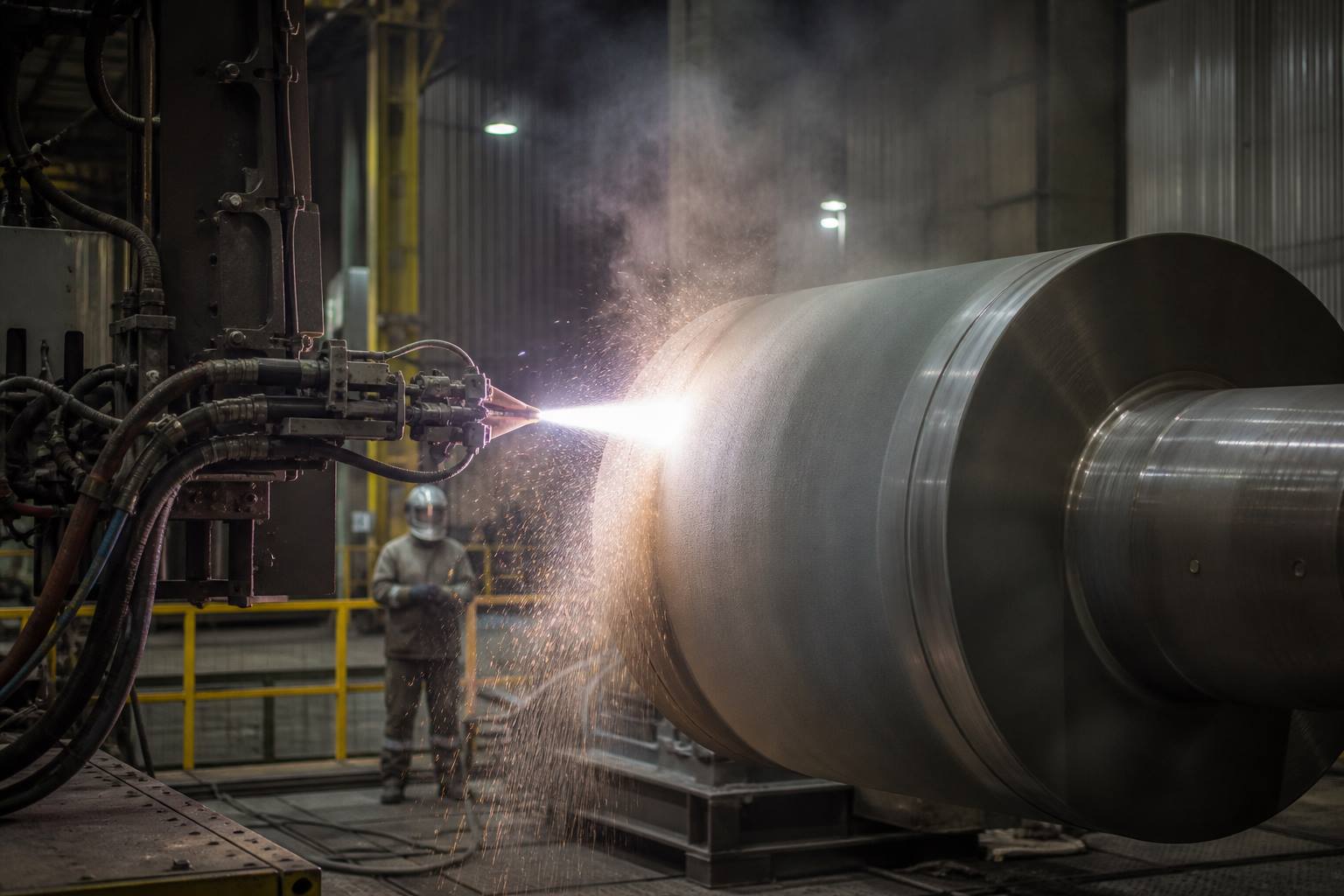
How the shop actually works
St. Louis Metallizing craftsmen have spent decades putting metal and ceramic coatings on parts that see wear, heat, and corrosion. Power plants, chemical lines, mines, paper machines, and construction fleets send journals, rods, rolls, and housings here because a new forging is slow and a naked repair does not last. Coatings applied in this building routinely add 50 to 75 percent more service life when the base metal is still sound and the drawing still matters.
Deposition is not a single trick. Guns in the booths put down metallic and ceramic materials at rates from three to sixty pounds an hour, which is why a pump sleeve and a ten-foot roll can both leave on a production schedule instead of a science-project calendar. Higher quality at a price the maintenance planner can defend, and a ship date that does not drift because someone is still “waiting on the coating guy,” is the daily target.
None of that holds if the grind bay is guessing. CNC grinding and machining, dynamic balancing with paper to match, a vision system for gap radius, bore scopes on interior welds, Level II NDT, certified taper gages, PTA where a weld overlay belongs, and a temperature-controlled building are how close tolerances stay close. Read the longer version on Our Company and the certificate trail on Quality.
Printing customers talk to a service desk whose people add up to more than a hundred years in that trade. Fast quotes, shipping dates that get watched, and a call when the job moves from strip to spray to grind — that desk is why a press superintendent does not have to learn HVOF. Start with printing or cylinder exchange if the roll is already late.
Coatings, then the grind
If you are still asking what flies onto the part, start at what thermal spray is. Dense carbides usually mean HVOF. Ceramics and odd alloys often mean plasma. Edges that need a weld, not a splat, go to laser cladding — there is a clip of the cladding cell. Big diameters still eat wire arc and combustion wire. Bores and jackets live on the ID and OD pages. After the gun: taper grind, diamond on carbide, super finish, peening, waterjet strip, and penetrant.